
On pet grief
Toward the end the summer, our dear tripod cat Teddy got ill and passed away. In fact, when I wrote that last post, he was already ill, but we just had no idea yet how severe it was. He had been diagnosed with a UTI at the end of July, and prescribed antibiotics as well as pain meds. So it had been a couple of weeks by the time I wrote that post, since he’d started all the meds, and his bacterial infection was gone. We knew that, because we’d taken him back to the vet twice. They reassured us that sometimes it takes a while for cats to feel completely better, because cats can develop cystitis as a result of the stress from having an infection.
To make the story a bit shorter, a few weeks after that initial visit, he was diagnosed with a brain tumor. He had not seemed to recover properly from his UTI and cystitis, and was actually getting worse, with serious neurological signs starting to show during the last week of August. It all happened very quickly in hindsight, but felt like a drawn out nightmare for us, and surely for him too (only more so, I imagine.)
I was left with a feeling of aching loss after he died, of course, but also a lingering (and rather poisonous) sense of regret and guilt. We had allowed him to be admitted to veterinary hospital for four nights during his last week of life. Although we had made this decision with the best of intentions, I hate to think of him largely alone in his kennel while he was there. We did visit in the evenings, but still, he was alone most of the time in a bustling hospital with dogs barking and other noises, as well as experiencing the stress of being handled by strangers. And on top of that, he had the symptoms of the tumor, which must have been scary and painful. If we had known that those would be his last days, we would not have made that decision.
But there’s the rub; we could not have known until he’d had the tests that they offered. When we admitted him it was with a sense of hope; the vet who spoke to us said that his bloodwork did not strongly indicate cancer, but his abdominal ultrasound showed inflammation. We hoped and hoped it was a treatable inflammatory illness of the bowel, or something along those lines. It was the MRI on the second last day of his stay that revealed the tumor. It was inoperable, and there was a slim chance of radiation having a temporary positive effect. This, we realized, was out of the question; we don’t have a car and the nearest radiation facility is 150 miles away and he’d have had to be there Monday-Friday for several weeks without us. Besides, there were the banal but ever-present financial problems; we had already run up thousands of dollars that we frankly could not afford. We will be paying those bills for many more months.
So, we brought him home with one last tiny spark of hope: that the steroids would give him a few more weeks of relative normalcy before his system succumbed to the cancer. They did not. He didn’t respond well to the steroids and we realized the night he came home that the next day we’d have to call the vet to come and euthanize him. He could not get up; he was in pain. He was very unhappy. One of the saddest moments was when I went to the kitchen to open a can for our other cat, Teddy’s ears pricked up (my partner told me) and he tried to get up but couldn’t. When the vet arrived for his euthanasia, everything felt surreal. I lay beside him and cried and sang to him and told him stories about his life. Our other boy lay close by. My partner cried and stroked Teddy’s head.
Pet grief is real. We all experience grief differently, in the same way that we all experience any traumatic event differently, but I believe that the roots of those difference don’t lie in who we’ve lost. Losing a loved animal can feel as devastating to some of us as losing a human family member. I think it’s important to recognize our own grief and honor it, no matter whether others can relate to or understand it. We have to take as long as we need to properly feel our feelings and do what feels right regarding memorializing our pets.
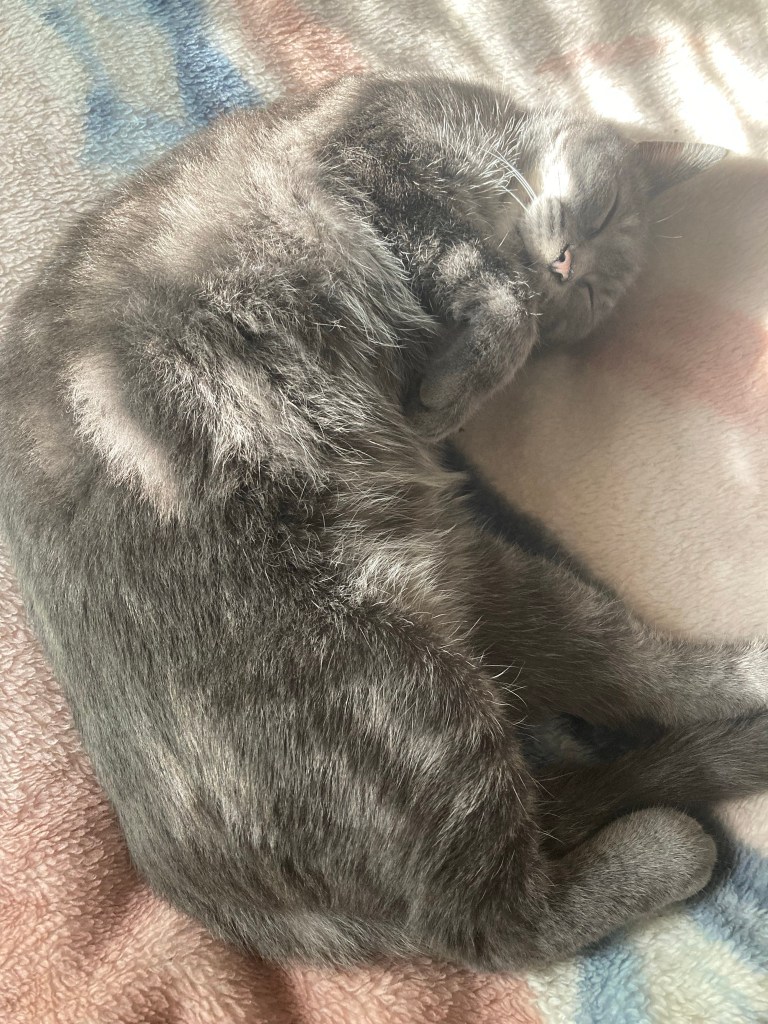
I learned the other meaning of the term “pet grief” during this time. Other pets in the home grieve the loss of their companions, too. Our second cat, Felix, has had to go through his own process, and I have come to believe that his grief process is not a straight line just as ours isn’t. Sometimes he seems to me to wake up extra lonely and sad. Perhaps this is just me anthropomorphizing him; I don’t know. But I do feel quite certain that seeing Teddy after he’d passed away was helpful for his understanding. After that, Felix seemed sad rather than anxious, as he had been while Teddy was in hospital.
Moving toward a grief that is more peaceful, here is what I say (the words vary) to Teddy sometimes when I light his candle: “Hi Teddy. I love you so much. I hope the choices that we made were respectful of you and that you know we made them with love. I hope you are basking in peace and joy.”
I hope, in time, that I can forgive myself. I never want to let go completely, and I want to keep his memory, even if that will also mean that I retain some of the grief. But just as I hope he is at peace, I do think that if he could express it, he would want me to also feel peace. And so I hope for that, and believe that will also honor his memory.
And his memory is a blessing.
 paper-crow-press.com